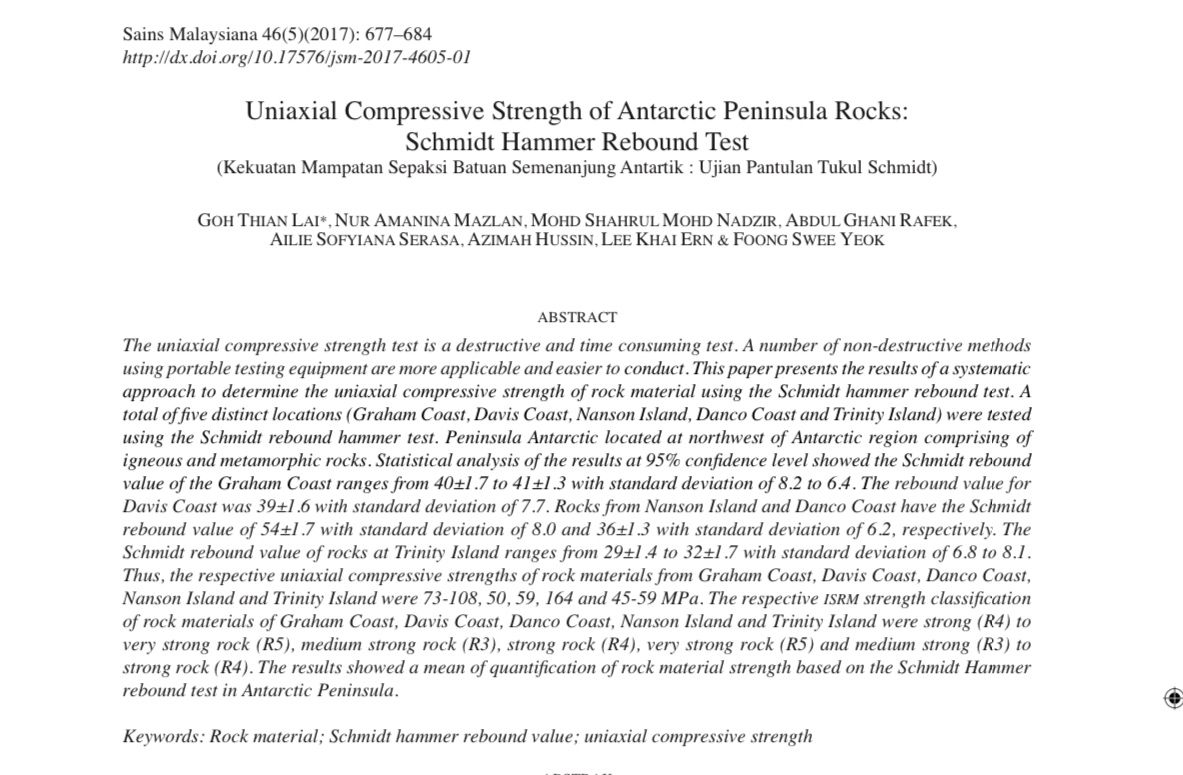
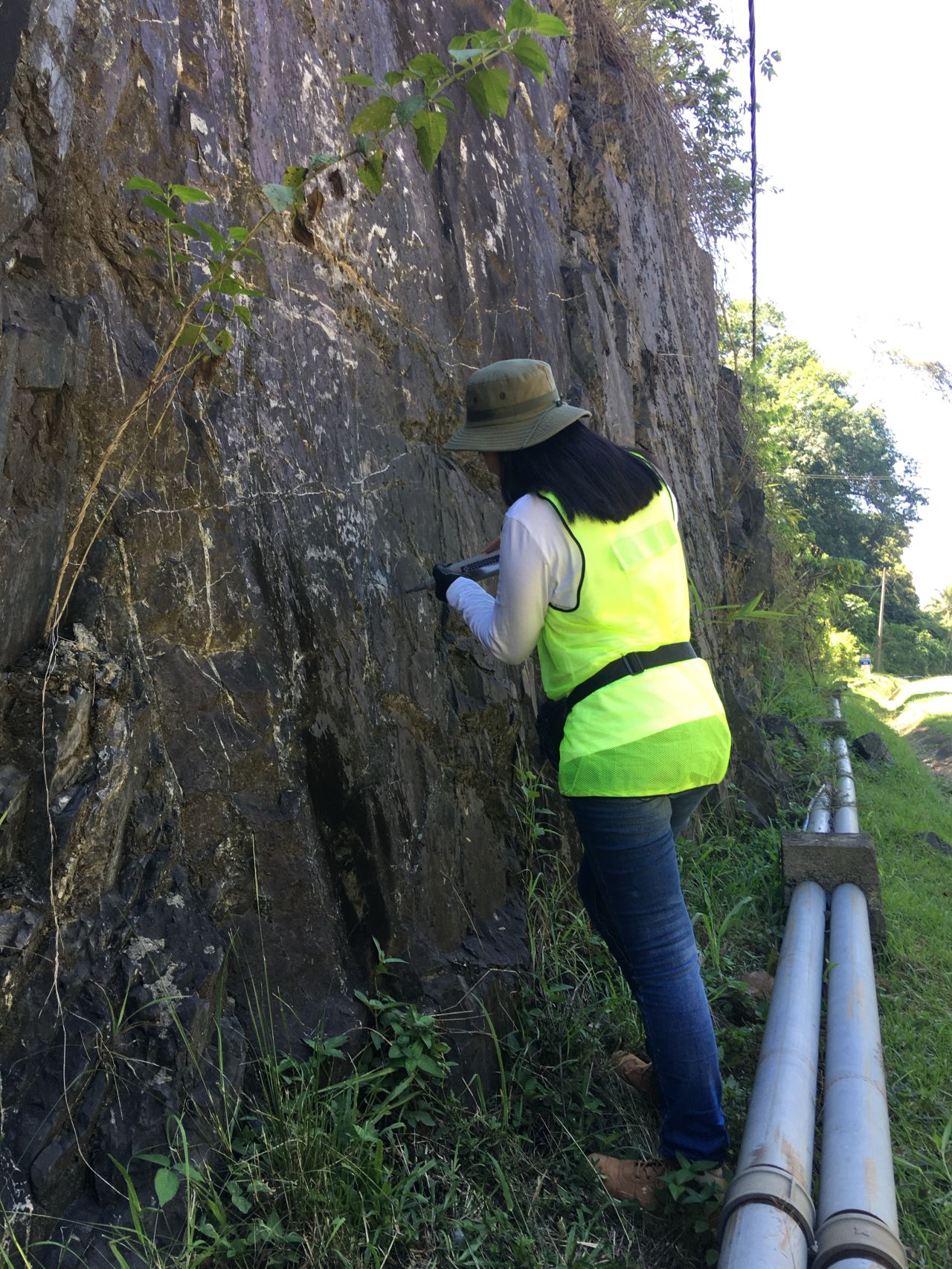
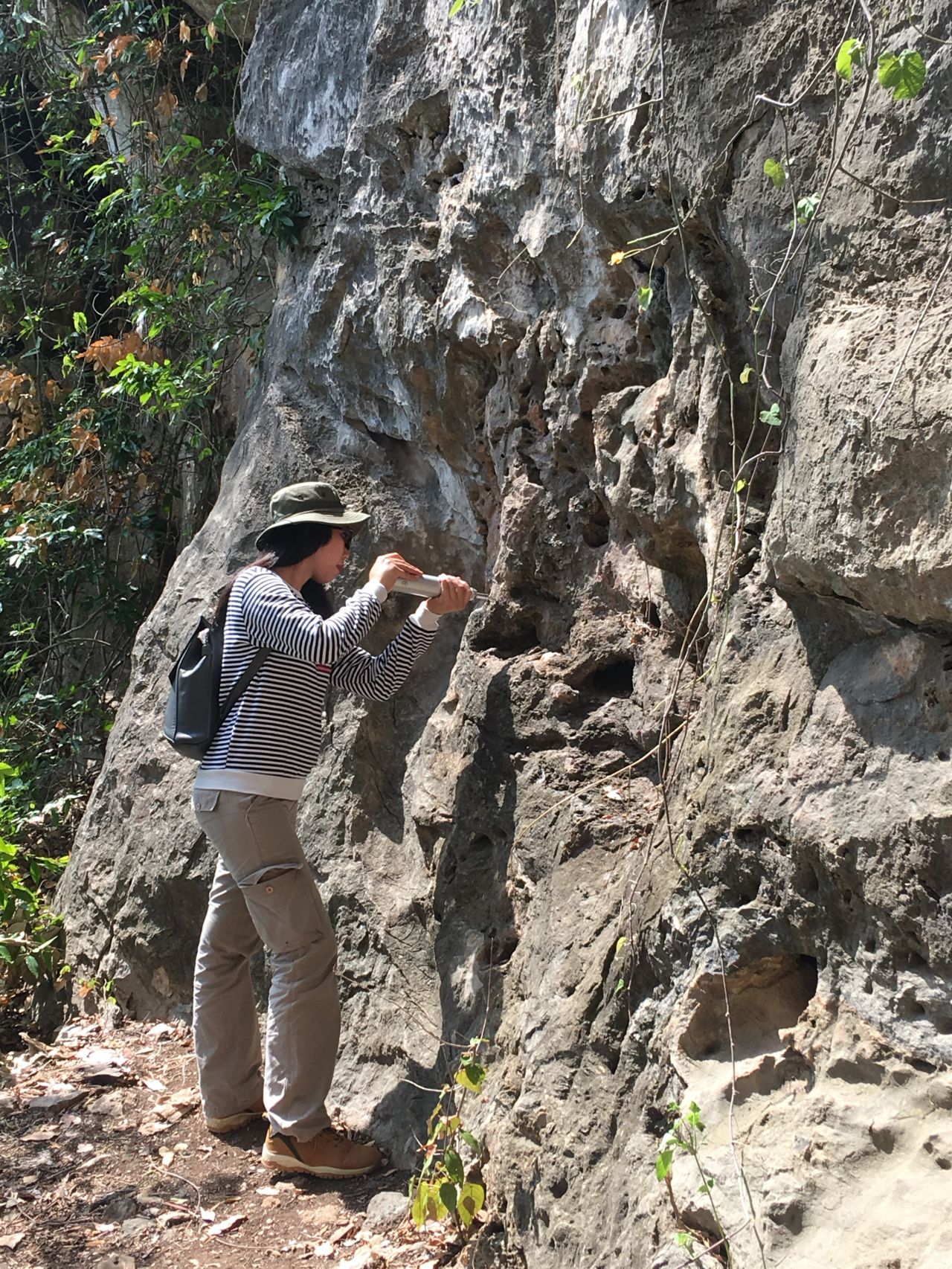
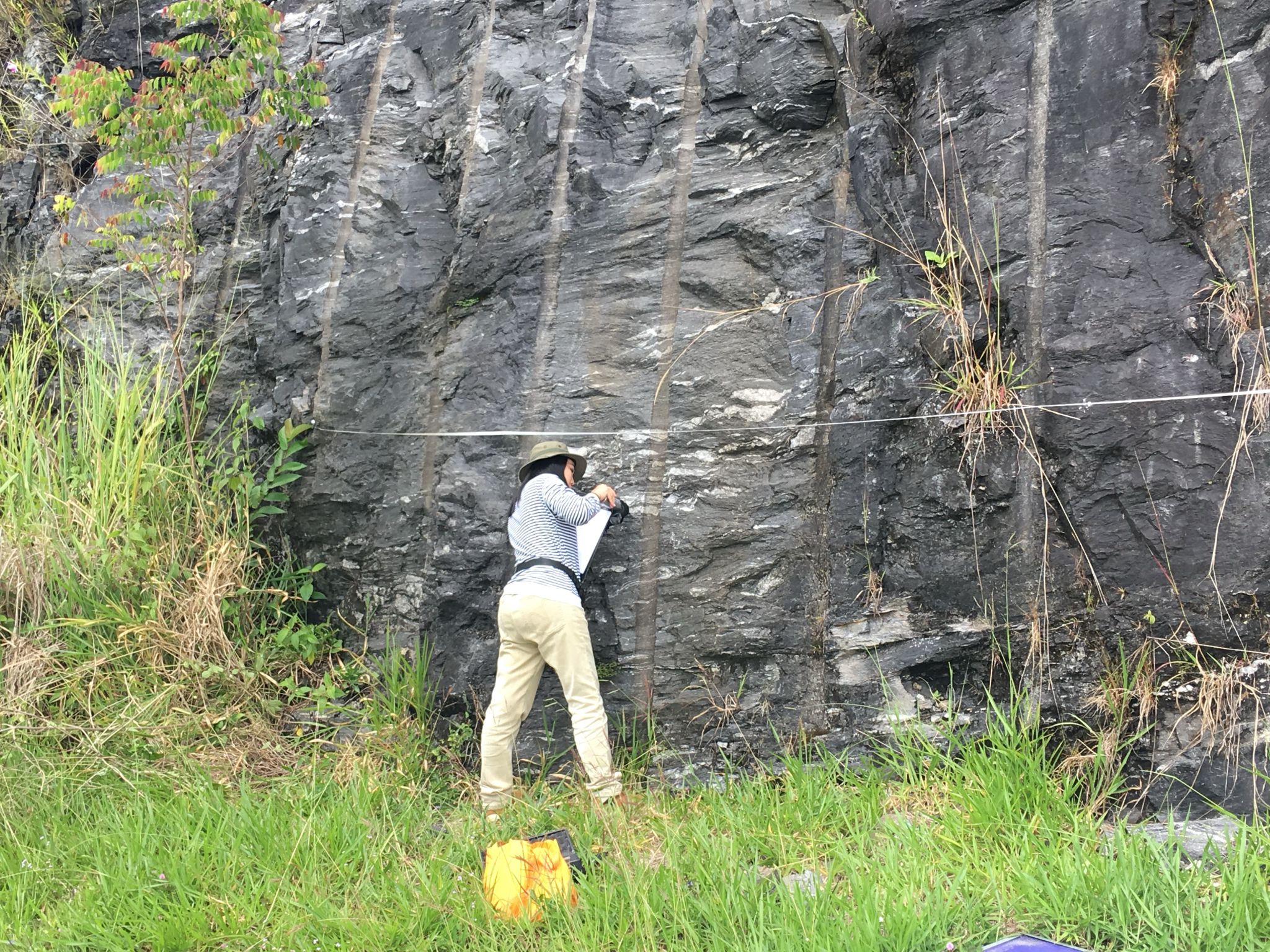
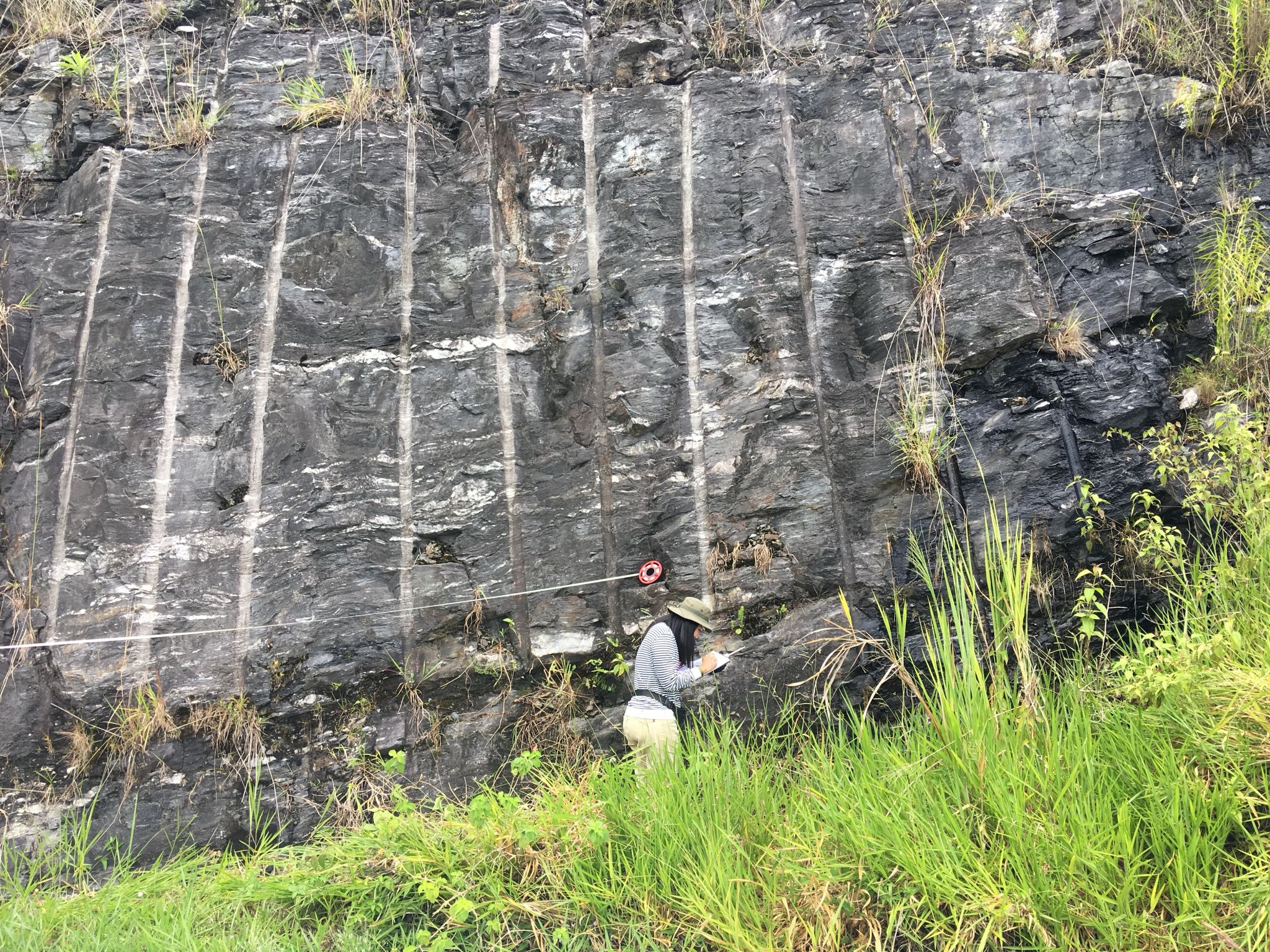
💡 The Schmidt hammer hashtagrebound hardness (RH) test is no doubt the easiest, pocket-friendly method to determine hashtagrocksurfacehardness.
💡 With its portable and simple mechanism, the Schmidt hammer (SH) is an ideal index apparatus, which supports its increasing field popularity and expanding range of applications for engineering geologists / engineers.
💡 The SH rebound hardness value (R) is perhaps the most frequently used index in rock mechanics practice for estimating the uniaxial compressive strength (UCS) and the Young’s Modulus (E) of intact rock.
💡The R values are usually obtained both in laboratory and in situ conditions. The SH has long been widely used for estimating the UCS of hashtagdiscontinuity rock walls. There’s too many empirical equations out there published to predict UCS for different lithologies. Myself included. I’ve published several papers on hashtagUCS predictions for hashtaggranite, hashtaglimestone, hashtagquartzite, and hashtagschist.
💡 The R value is also highly used as a pre-assessed measurement to the strength, hashtagexcavatability and hashtagboreability of rocks by mechanical means.
💡 Some research has also taken the R values into classifying the state of hashtagweathering of hashtagrockmasses.
💡 However, given the flexibility of the SH test, one must also consider the proper method of using the hashtagSchmidthammer. The influence of hammer type, the hashtagdirection of hammer impact, specimen hashtagdimensions, hashtagweathering, moisture content, etc has to be reported in analysis procedures.
Of course, the usage of the SH test has to be validated using several other testing methods. I believe that hashtagfieldgeologists / hashtagengineers carry the SH everytime they go to the field 😁
hashtagrockmechanics hashtagSchmidtHammer hashtagReboundHardness hashtagengineeringgeology hashtagrockproperties hashtagUCS hashtaguniaxialcompressivestrength